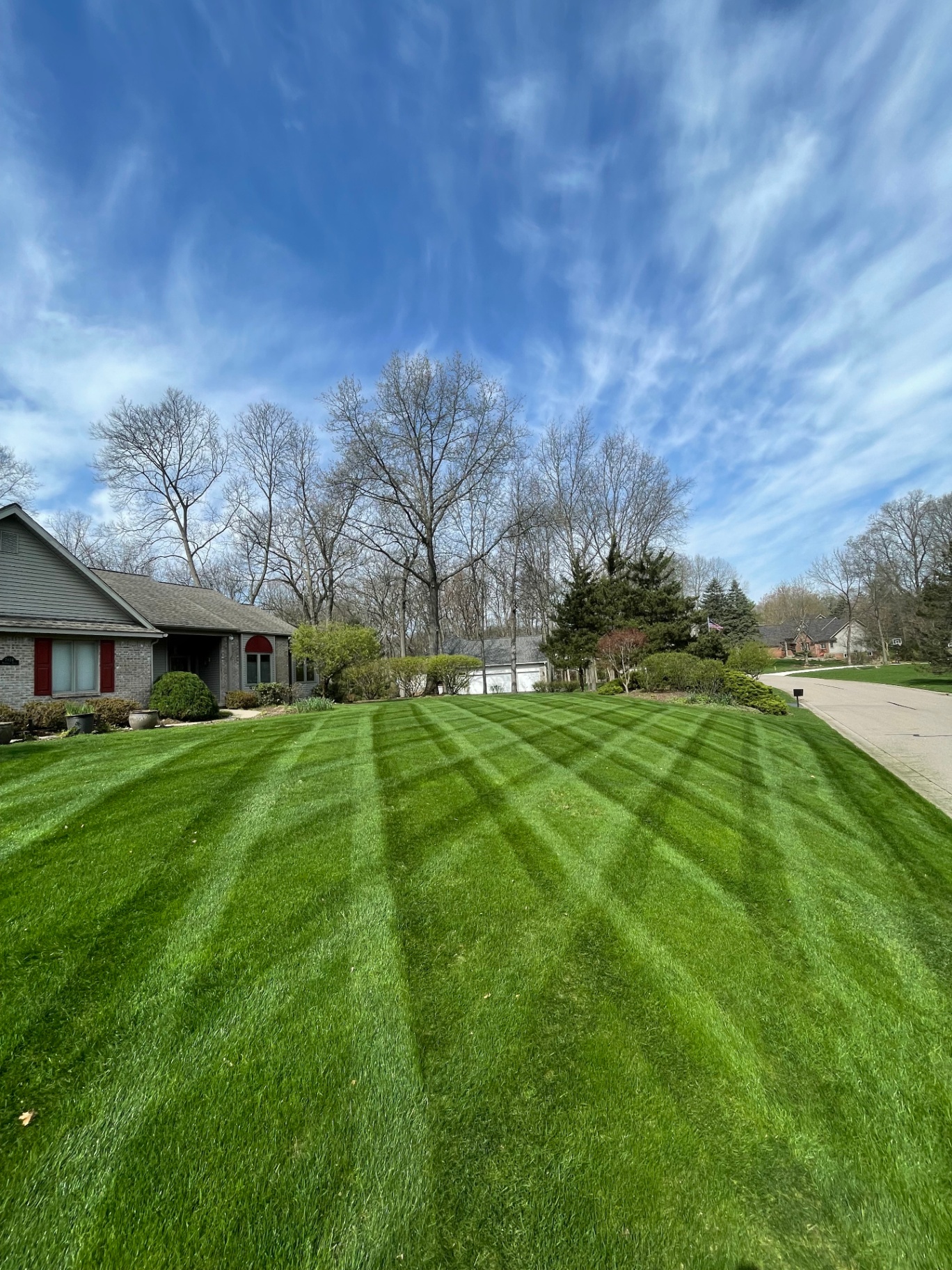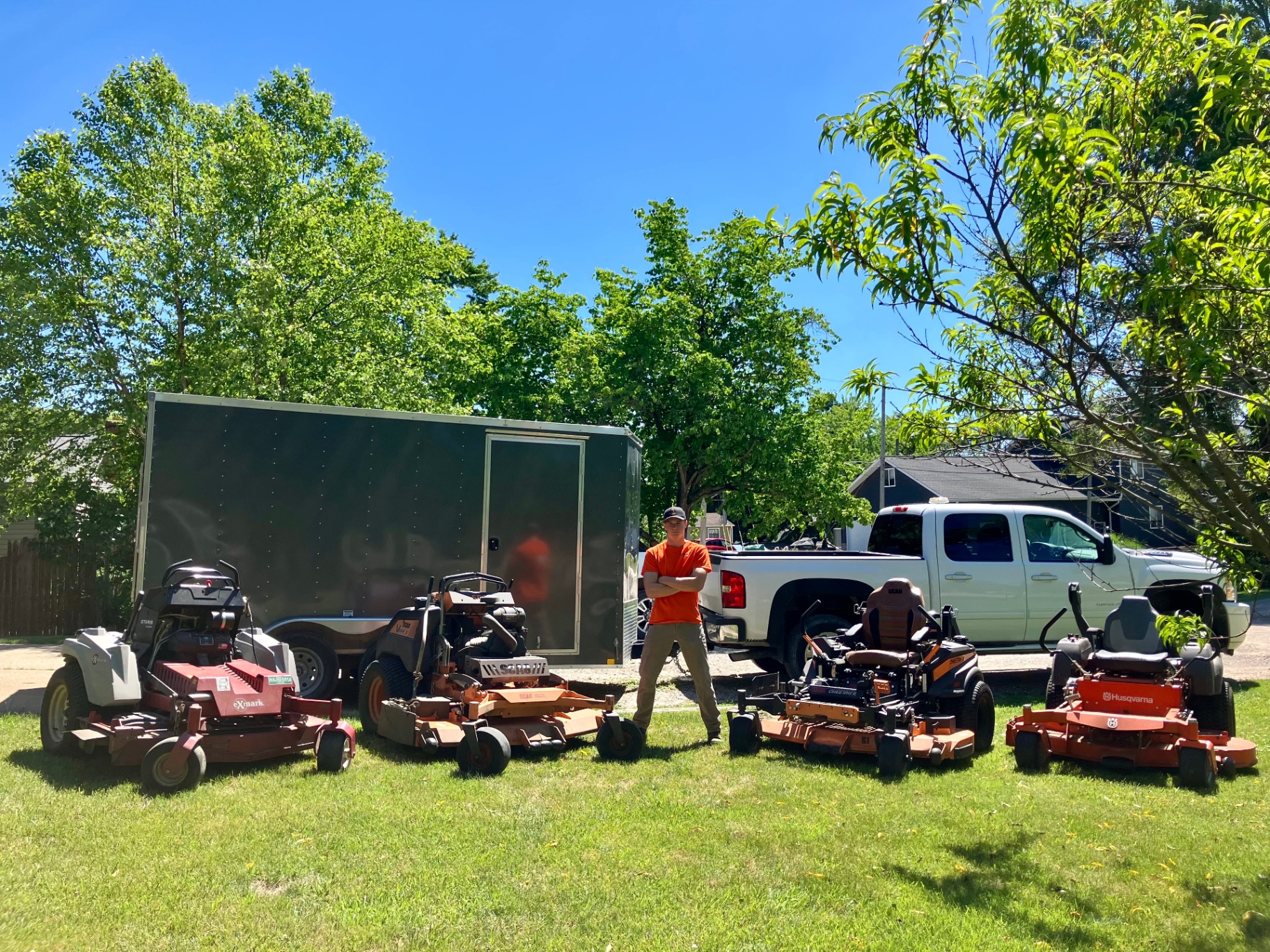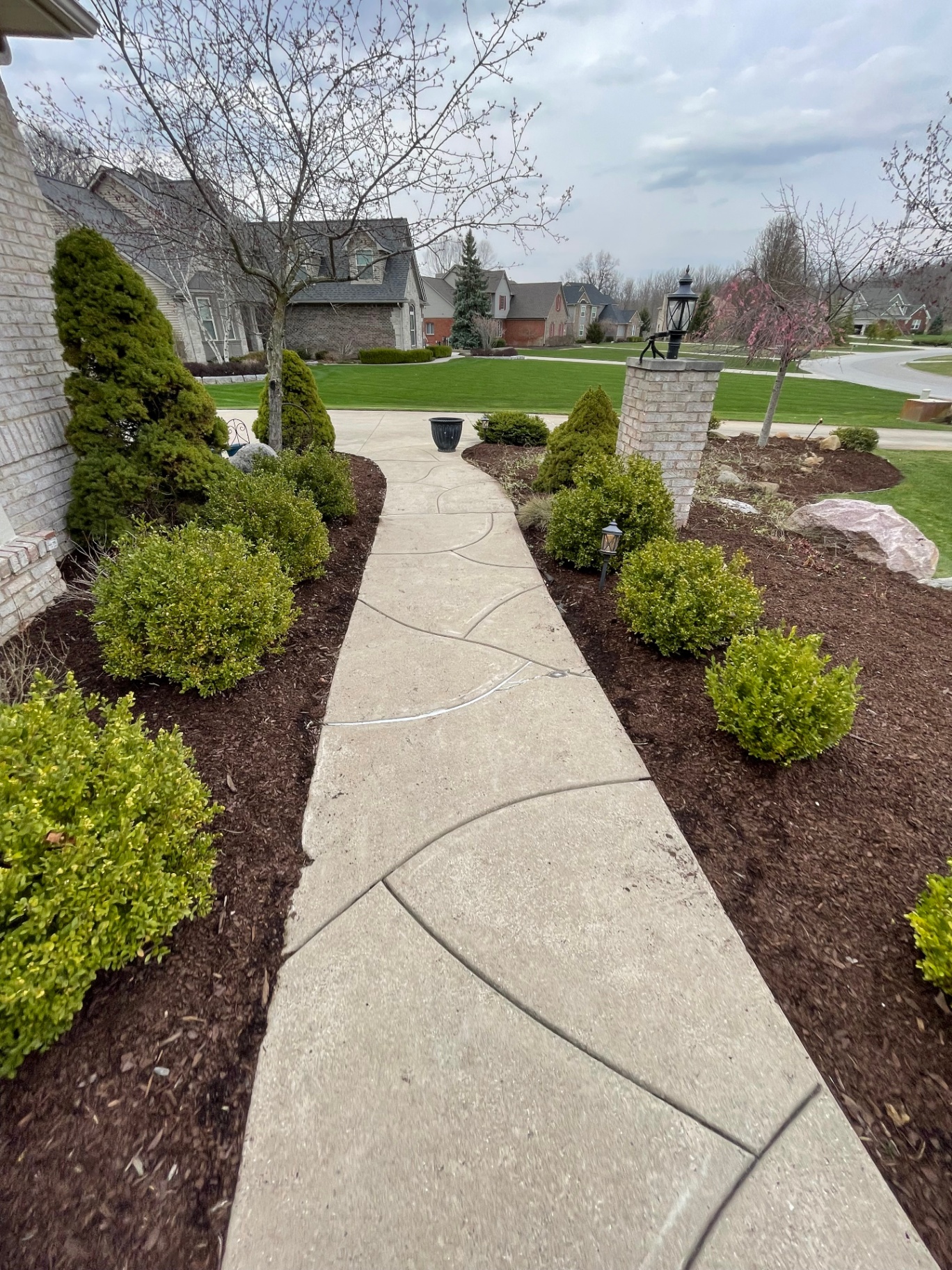
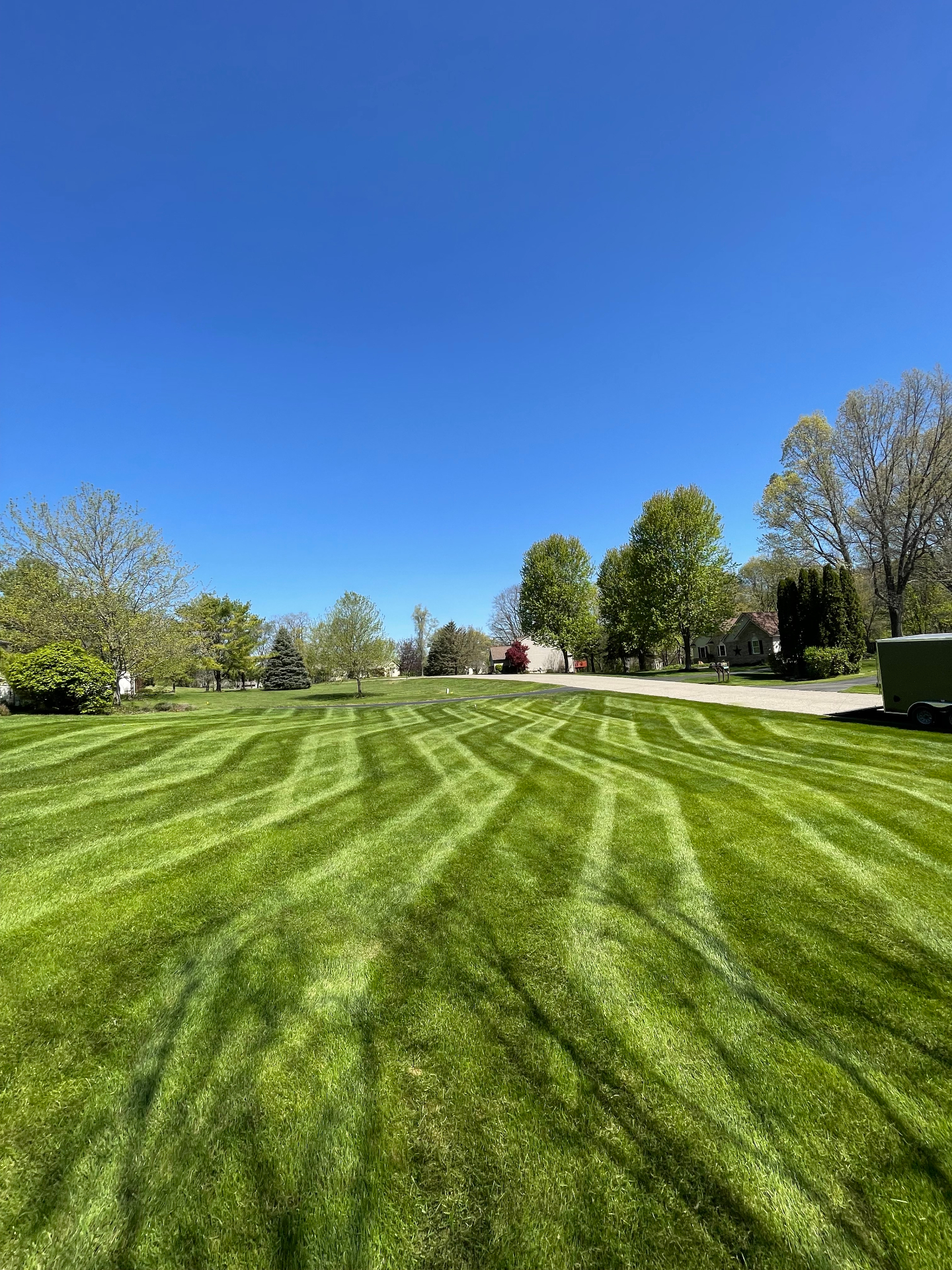
Cut height and blade sharpness do the work
Two things separate a lawn that looks good all season from one that goes thin and weedy by August, and neither of them is how often it gets cut.
The first is height. Michigan lawns are cool-season bluegrass and fescue blends, and they hold up best around three to three and a half inches. Taller turf shades the soil, which suppresses crabgrass germination and cuts water loss dramatically in July and August. Scalping a lawn short does the opposite on both counts.
The second is blade sharpness. A dull blade tears the grass instead of cutting it, and torn tips brown out within a day — that gray cast over a freshly cut lawn is almost always dull blades. We sharpen on a schedule rather than when someone notices.